
Today, many of our friends, clients and connections lost Outlook, Teams or Copilot. "God bless Google" was a phrase we used more than once this afternoon as others struggled to connect.
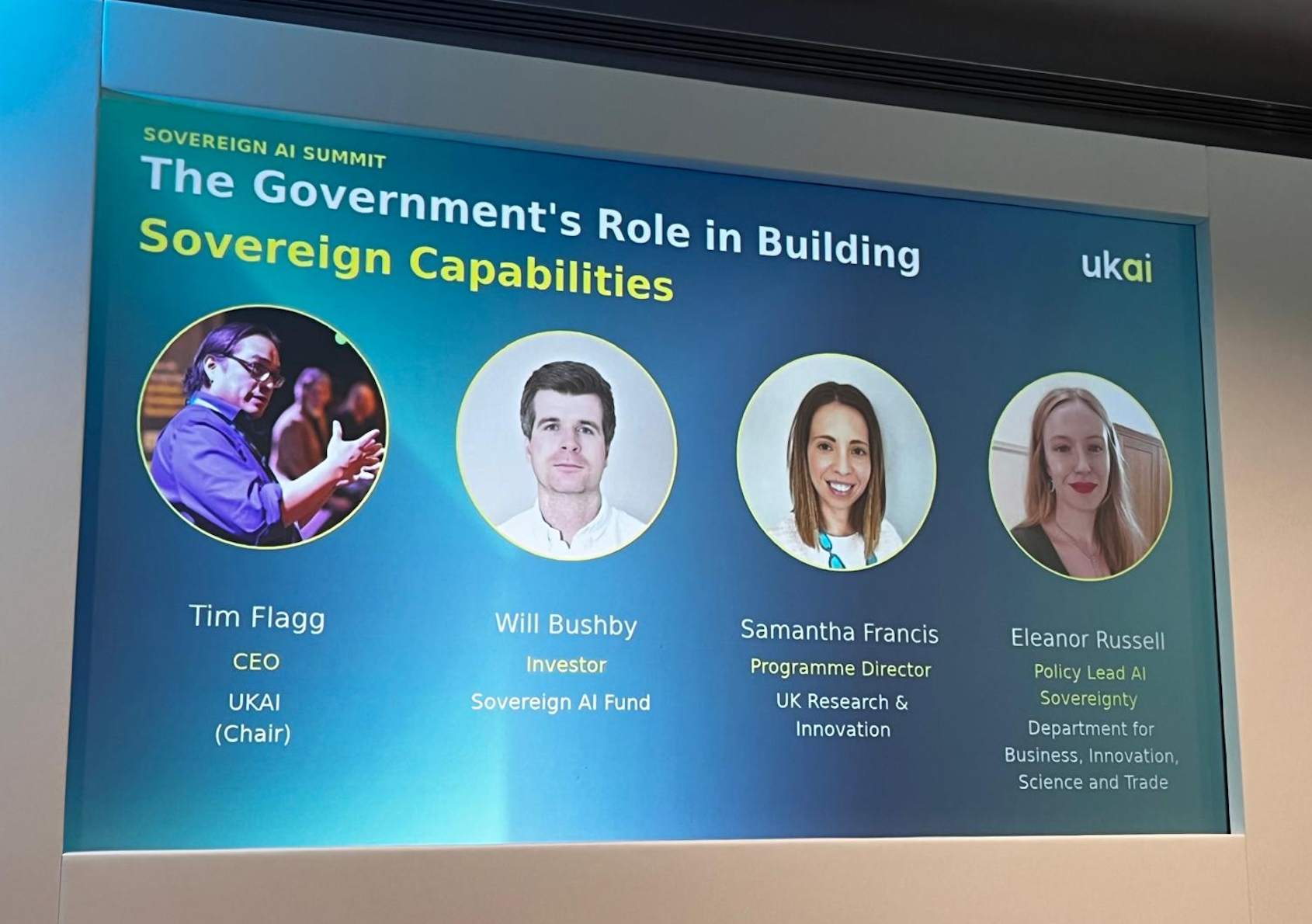
Eleven days earlier, on 2 November, I attended the really excellent UKAI's Sovereign AI Summit where many were discussing exactly this kind of risk and how Britain builds more control, resilience and economic value into its AI future. At the time, it honestly felt like a policy conversation. This week, the hypothetical scenario of where 430 million users were thrown offline became a reality.
Let me be clear about what I believe that this does and does not show.
An outage is not proof that a British provider would have done better. It is not an argument for walking away from international technology. However, it does put a hard edge on the fundamental theme at the centre of the summit: How much of our ability to work, communicate and adopt AI should rest on a small number of providers?
At NoCodeLab.ai, we are - and have always been - technology agnostic. We use the tech that works best to solve the problem. We also help organisations adopt and apply AI in practical, hands-on ways, so the idea of not being reliant on single providers is how we live and professionally breathe.
Revisiting my time at the summit, here are my main takeaways that - in honestly - feel way more urgent today. We also wanted to share what we think these insights mean for the businesses we work with.
Sovereignty is about choices, not isolation
The opening session framed sovereign AI around control, resilience and security. Its starting point: critical national infrastructure cannot rely solely on non-UK companies. But the answer, agreed by all, was that this is not the time to pull up the drawbridge. Sovereignty was described as a shareable tech stack, something British businesses can build with other countries and export.
A later session offered a simple three-part model:
- Own capabilities where the UK has a competitive advantage or a national security need.
- Collaborate with trusted partners.
- Secure access to frontier AI where it remains essential.
The goal is to reduce over-dependence, not to control every link in the supply chain.
For most organisations, that means resilience is not about replacing Microsoft products. It is about understanding your dependencies, having credible alternatives where they matter, and keeping essential services running when a major supplier wobbles.
The UK cannot buy what it cannot find
One of the most practical observations of the day: British AI capability is hard to discover.
Government buyers and investors say they want to buy from UK companies but struggle to find them. UKIA's response is a Sovereign AI Directory that makes those businesses and their capabilities searchable.
Discovery is only step one. One discussion argued that government should act as an intelligent first customer instead of defaulting to the major US providers, with procurement weighing social value (jobs, talent, resilience) alongside price. That is not the same as rewarding companies simply for being British.
One panel questioned whether a broad "Buy British" label would achieve much if large international firms could qualify through their UK presence. The better route: simpler procurement terms that give smaller suppliers a genuine chance to compete.
This week sharpens the point. If you want options when a service fails, those options need a route into the market before the crisis.
Resilience includes the businesses outside the spotlight
During questions, a founder asked what support exists for bootstrapped UK companies growing without venture capital. The panel acknowledged that UK processes are often slow and poorly matched to the pace of scale-ups. That matters. A strong ecosystem cannot consist only of a handful of heavily funded firms racing to build frontier models.
The summit pointed to other areas where Britain can build real strength:
- UK-specific applications
- Smaller, more energy-efficient models
- AI assurance
- The deep practical knowledge held in domestic industries
In short, concentration creates exposure. A broader supplier base won't prevent outages, but it gives customers more choice and limits the damage when any single route fails.
Trust has to plan for failure
One phrase from the standards session has stayed with me: "moving at the speed of trust."
The discussion treated AI assurance as a profession in its own right, needing specialists who can assess models and understand sector risks in areas like healthcare, law and energy. It separated three distinct jobs: certifying professionals, accrediting the bodies that certify them, and certifying the models themselves.
That is a far more useful idea of trust than a promise that technology will always work. Real trust rests on knowing what has been tested, who is accountable, and what happens when something breaks.
From what has been reported so far, today's outage is neither an AI safety incident nor a cyberattack. But as more everyday work runs through AI tools, plain service reliability becomes part of the question of whether we can depend on them.
Capability has to reach people, not just infrastructure
Sessions on proposed data-centre developments looked at access to compute for schools, universities, SMEs and startups, and at how community organisations could turn that access into local benefit. The education session added a necessary counterweight: buying tools does not build capability by itself. It stressed AI literacy, judgement about outputs, training, and the risk of leaving people and regions behind.
The NoCodeLab view: sovereignty starts small
For most of the organisations we work with, "sovereign AI" sounds like a debate for governments and hyperscalers. This week showed it is also a question for a 20-person firm whose whole day runs through one inbox and one chat tool.
Three principles guide how we help clients adopt AI:
- Map before you build. Know which tools your operations depend on, and what happens if each one stops.
- Design workflows that can switch. No-code tools make it practical to connect more than one AI model or provider, so a single outage or price change doesn't stop the work.
- Invest in people, not just licences. AI-literate teams can adapt when a tool fails. That is the capability the education session described, and it is where we focus our training.
For a small business, sovereignty simply means the freedom to choose and the ability to keep going.
The Takeaway
Sovereign AI is not a flag on a data centre or a model with a UK address. It is the ability to make informed choices about suppliers, infrastructure, standards and skills, and to know what you'll do when a system you rely on stops working.
The summit asked everyone to leave with one concrete action. This week offers an obvious one: List the technology your organisation cannot function without, and ask honestly whether you have a workable alternative for each.
If you'd like help working through that list, our AI Readiness Diagnostic is a good place to start. Get in touch with the NoCodeLab.ai team.
Over to you: when Outlook or Teams went down this week, what did your team fall back on? And did it work? We would love to hear in the comments.
Summit material draws on my notes from UKIA's sovereign AI event on 2 November. Outage details reflect reporting available on 13 November and may change as Microsoft's response continues.