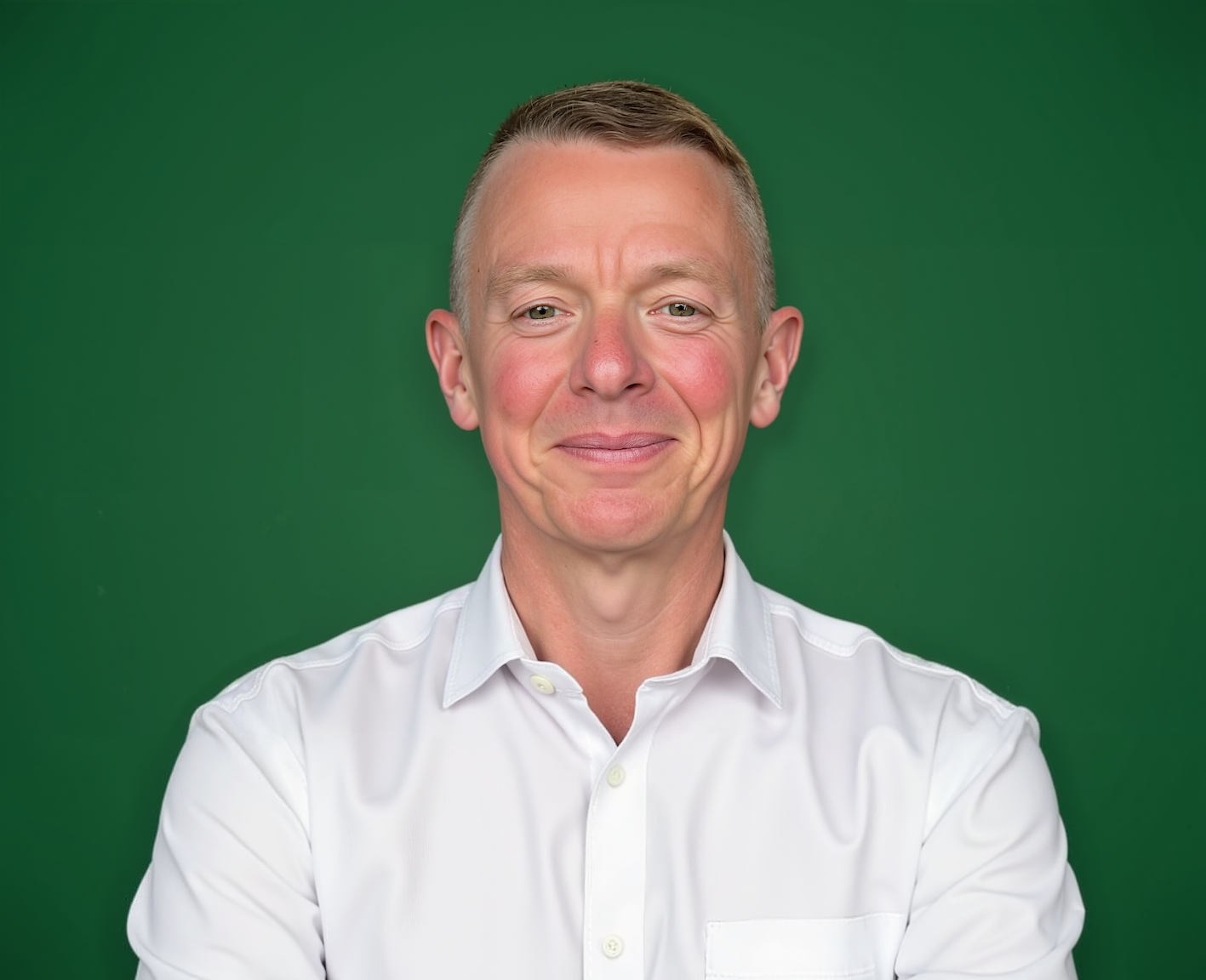
When Brian Lancaster and his colleague completed a management buyout of Projex Cellular Infrastructure nearly two years ago, he gained more than just ownership. He gained the freedom to digitally transform a business that had been running on manual processes for over a decade.
Projex provides specialised mobile network products and services, with their flagship offering being temporary coverage at major festivals and sporting events. It's a high-stakes business where failure isn't an option.
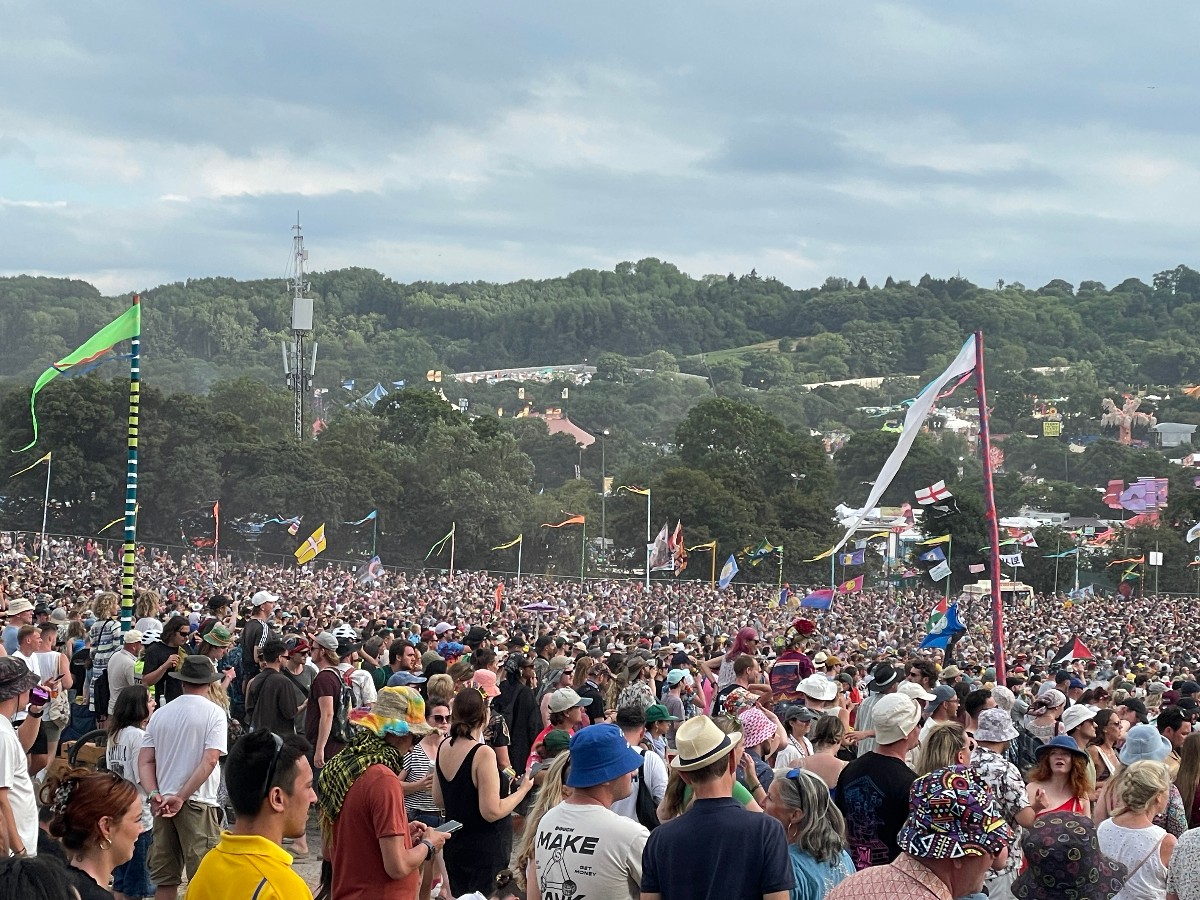
"When we go onto an event site, we have a window of probably about three days to build our site, which is quite an undertaking. It's often a big, 30 metre tower that is needed. It's got a lot of complex equipment with it. We lay a temporary roadway, we bring in big generators and large pieces of plant", Brian explains. "If we are late, we will fail. We can't say to headliners at Glastonbury, oh, we're not quite ready. Can you hold on? They're like, no, no. The band will strike up. The show will go on. Crowds need to be connected.
The pressure is immense, but their track record speaks for itself: "We've delivered, I haven't counted for a while, but at least 1,500 of these sites and we've only ever failed to do one of them. And that was back in 2014. And that was an issue that was completely out of our control."
The Problem: Manual Processes in a Zero-Margin-for-Error Business
Despite their impressive success rate, Brian knew the business had certain needs. The company's manual processes for equipment tracking and deployment were creating unnecessary risk.
"We had a very manual process where an engineer created a kit list for the warehouse to put together and ship out. That does get checked by myself.
And then it gets issued to the warehouse, and then the warehouse picks something off a shelf, puts it in a trailer, and off it goes", Brian describes. "I make mistakes. My engineers make mistakes. The warehouse person might pick the wrong thing because we have boxes that look identical, but they do different things or they have different functionality."
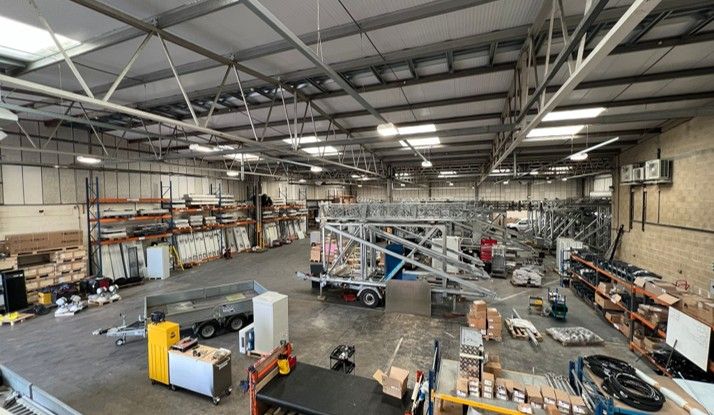
For a business managing peak seasons where between the months of April and September they are incredibly tight for time and resource, and working with highly specialised equipment where if you send the wrong thing, "it's just not going to work", this level of uncertainty, however minor, was untenable and presented risk that could and should be managed..
The Solution: Building Custom Tools Without Developers
Brian had a clear vision of what needed to change, but faced a common obstacle: "We don't have internal developers." He had a list of "probably a dozen things to do and implement, not quite knowing how to do them."
That changed when he discovered no-code development through the NoCodeLab.ai Launchpad Accelerator programme.
The first project that the Projex team developed with us was a warehouse inventory and equipment tracking app. Whilst he admits the concept of a warehouse equipment inventory app was nothing special, the implementation of this was highly specialised for his company’s unique needs.
The solution involved tagging approximately 3,000 items with near-field communication tags. "The kit list says, right, you need one of these, take your phone and scan it. It scans, and it says, YES. I'm expecting this - this is the right thing, or NO. Don't use this, or NO. This is broken, after it's been reported as broken."
The system also provides forward planning capabilities. "We can forecast ahead. So, at the moment we've got a number, I don't know how many different spreadsheets we've got. But trying to work out what I need for the year… our customers in December and January, say, these are all the things I want to do, and we have to go away and go, okay, yes, we can do all these things. It makes that so much easier as well."
As Brian explains: "It's all about de-risking. It's not about doing it quicker, it's all about de-risking the entire delivery process, and that's what it does for us."
Achieving Full Team Buy-In
The response from his team exceeded expectations. "The team loves it. The entire business is bought into it", Brian reports enthusiastically.
What made the difference was his approach to development - building with his team, not for them. When working with one of his engineers on basic functionality, they had a breakthrough moment: "We just looked at each other and went, well, what if we did that and it did that, and we just did that. I went, hold that thought. I'll see you after lunch!” Then I went, “no, no, no, no, no. Let me show you how easy this is."
Brian was able to implement the change immediately. He describes the process: "I simply used plain English. When a user does this, please do this and then do that because of that. And it went off and chewed it away five minutes later, publish the test app - bang! Oh, happy days."
This ability to rapidly implement user feedback has been transformative. "Don't suffer in silence. Don't sit there with a great idea. Don't be frightened to ask a question if you want a change. Let's talk about it and let's say, why do you wanna do it that way? Yes, that's a great idea."
He contrasts this with traditional software development: "You can go to software houses and I've been sold it so many times. Oh, it's customisable. We can create different things for you. Nonsense. I won't swear, but they're just selling you what they want you to hear at the time. Now - if you can think it, we can do it. This redefines how we think and behave , it's mind blowing. It really is."
Rapid Expansion: From One App to Multiple Solutions
The success of the first project gave Brian confidence to tackle more challenges. By the time of our interview, he had already launched a second application-completed over a single weekend.
"I literally did it this weekend. I think I've started Friday about three o'clock, and I finished it on Sunday lunchtime", he says about his smart plug monitoring dashboard, which manages approximately 47 devices deployed at remote sites.
Previously, these smart plugs would "send an SMS to one of two numbers if there's a fault. And often they get lost in the noise a lot. There's a lot happening."
Now, Brian has created "a lovely dashboard that sends signals intelligently, queries them, provides a view, alerts people by email, by SMS, to any faults. And you can manage the smart plugs as well."
He reflects on the contrast with previous attempts: "This is something I did try to do in probably May or June of 2025 using other methods and I was just getting nowhere. I could make it send me a text message and that's about it. But this is a beautiful looking dashboard and it looks really professional. It looks like we've really spent some money on it and customers are presented with a professional, slick impression - that ultimately reassures them that Projex can be trusted and know what they are doing."
The Learning Curve: Not Without Challenges
Brian is candid about the difficulties he encountered, particularly when transitioning from front-end development to backend database connections. His background helped, "I understand relational databases. In a past life, I've done software sales and software product management before, but there was still a learning curve.
His advice? "Just work through it, be clear. It's a step-by-step thing." He emphasises the importance of persistence and clear communication with AI coding assistants: If I say (to a vibe coding IDE) OK, go off and do this, and I ask can you do it for me, or can you tell me how to do it, the system will simply say, OK - if you give me permission. I'll then go and do what's needed.
Despite the challenges, the results speak for themselves: "I'm trying to think if there's anything we've wanted it to do that we can't get it to do. And we've not found anything yet. There's always been a way."
The Development Process: Phased Implementation
Brian and his team have taken a structured approach to rolling out the inventory system. "There's two phases to it. Up until the end of the 2025, we were getting the inventory sorted. So we were tagging everything - an estimated 3000 items."
Currently, team members are "using the application to commission tags, feed into the database what the thing is, test functionality. In 2026, we start looking and planning to build things, then we're gonna bring in the kit and the resource forecasting side of it."
As Brian notes, the phased approach "seems to break down quite well."
The Broader Impact: Digital Transformation Philosophy
For Brian, this journey represents more than just building a few apps-it's about fundamentally improving how his business operates.
"I've always been a big believer in just don't do the same thing all the time. Put little things in place to make your day-to-day job a little less tedious, a little bit more enjoyable. But my sphere of influence and ability to do that has been limited. However, since I'm now a co-owner of the business, I have the freedom to do this."
He's passionate about the hand side of digital transformation: "This sort of digital improvement, digitisation of the business, it's not about putting people out of work. It's about just getting rid of the tedious day-to-day dull stuff and just making life a bit easier so you can focus on what you're good at and what you enjoy."
The personal satisfaction is evident: "I get a kick out of it, but I love seeing other people go, oh, thank you for doing that. That's amazing. That's magic. I don’t know how you've done that, but it's done. I mean, you know, we have automated emails for reports and updates and so this is just another level. This is off the charts."
Advice for Other Business Leaders
When asked what advice he'd give to business owners with great ideas but limited capacity, Brian is direct:
"Have a clear problem statement. Clearly identify the pain that you are going to remove. And you don't have to at that point know how you're going to do it, but just clearly identify the pain that you're going to remove. Then speak to people. Why is it a pain? How could you make it slightly better?"
He challenges the common excuse about lack of time: "There's this whole thing about I don't have the capacity or the time to do something, nonsense. You do, it's just not a priority. There's something else you're doing that you think is more important than what you could be doing."
His recommendation? Start small and build from there. "Don't worry too much about how you're going to do it. 'Cause you'll probably figure that out along your journey. Start at the beginning and go, ah, what about this? And then somebody else will look at it and go, oh, could it do that? Yeah. Okay. Right. Yes, it can do that."
On the capabilities of no-code platforms, Brian is emphatic: "It can do so much more than you could ever imagine it can do. And I think that's the wonder of it."
For non-technical business leaders, his message is encouraging: "All you need is curiosity and a clear problem statement, then you can really do something brilliant quickly."
The Value Proposition
Brian is unequivocal about the return on investment: "The value's great, the value's unreal."
He appreciates having experts who stay on top of rapidly evolving technology: "The one thing that most people that we work with don't have is the time to stay on top of the latest technology."
But he's also pragmatic about not chasing every new trend: "I've seen in the NoCodeLab.ai chat group somebody reports, I've found this and they're doing this and I'm sitting here, thinking, right, I'm still on Lovable. And do you know what? It's doing what I want it to do, and I know how to make it do what I want. It's not broken. Don't fix it."
Looking Ahead
With two successful applications deployed and a list of projects waiting, Brian shows no signs of slowing down. He's particularly interested in expanding his knowledge: "The one thing I don't know how to do, and I would like to know how to do, is just a bit more on creating a bespoke AI agent."
For Projex, the transformation from manual processes to digital workflows isn't just about efficiency-it's about protecting the reputation they've built over 1,500 successful deployments.
Brian's willingness to help others on similar journeys is genuine: "If you ever need anybody to speak to somebody if they're unsure or they're not quite sure, then they are more than welcome to contact me for a chat."
His enthusiasm is infectious, and his results speak for themselves. As he puts it simply: "It just feels good. Yeah, it does. It's just empowering. Definitely."
Projex Cellular Infrastructure specialises in providing temporary mobile network coverage for festivals, sporting events, and other high-capacity venues across the UK. Learn more atwww.projexci.com