Case Study: Antonio Putrino & ENAIP Vocational Training
The Strategist
Antonio Putrino is an international executive with over 30 years of experience across real estate and technology, spanning Switzerland, Europe, and the United States. His career includes senior roles at BT Global Services, Swisscom, and Credit Suisse, where he led large-scale digital initiatives and managed multinational client portfolios across 90+ countries.
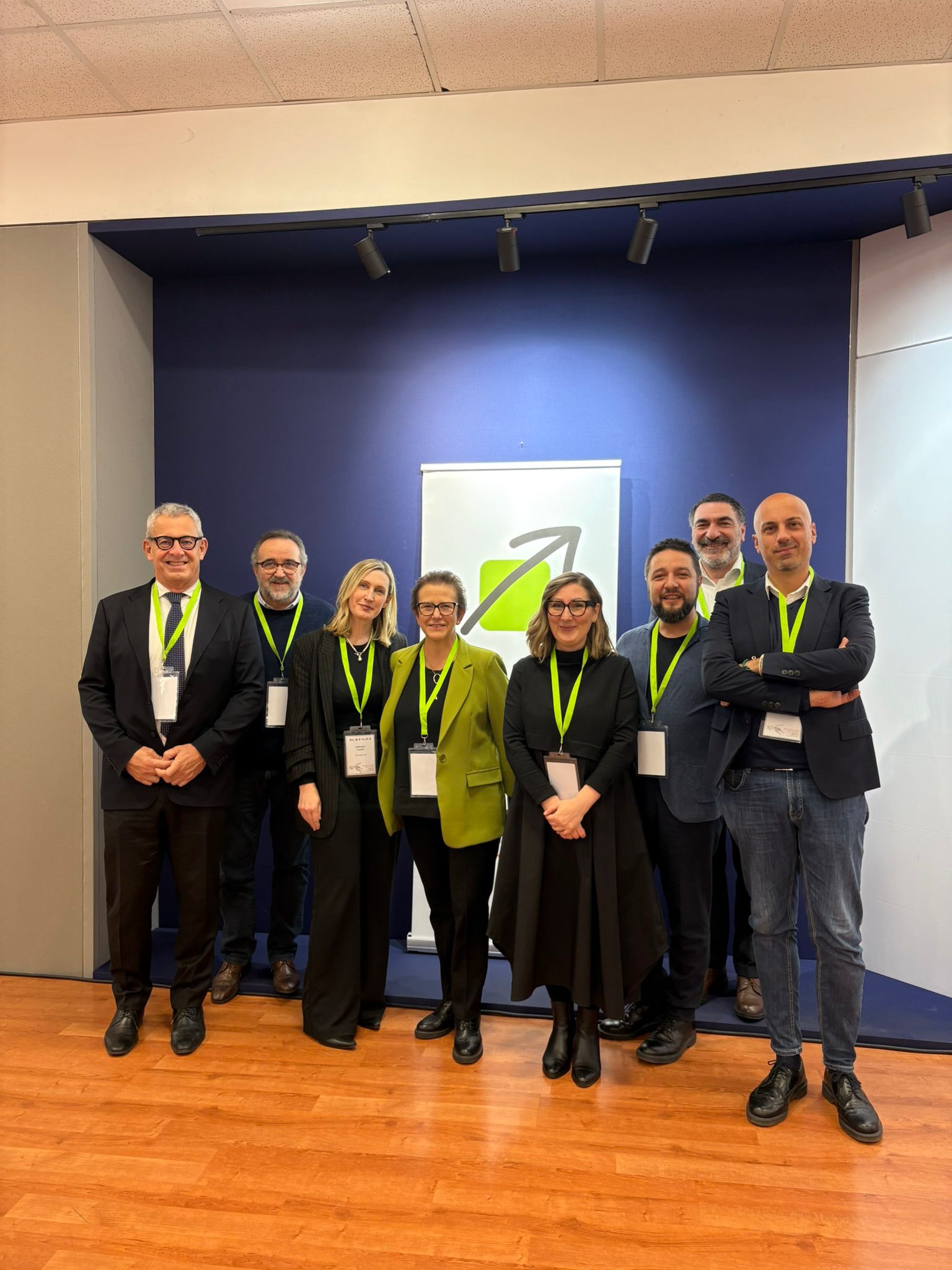
Beyond the corporate world, Antonio served as CFO and COO of the European Vocational Training Association (EVTA), a Brussels-based network committed to advancing human capital development across Europe. He has contributed to leading institutions in vocational education, human capital development, and international representation.
He's seen technological revolutions before. At the beginning of the internet age, working with Vocaltec Ltd., he helped launch the first real global e-commerce platform. He introduced early CRM systems for high-priority clients, developed one of the first location-based financial applications in Europe, and managed global outsourcing and BPO programmes for multinational enterprises.
Beyond the corporate world, he has contributed to leading institutions in vocational education, human capital development, and international representation. In recognition of his service to the Italian community abroad, he was awarded the Stella della Solidarietà Italiana by the President of the Italian Republic.
Antonio has known Sara for quite a few years and across quite a few projects. When she founded NoCodeLab in May 2025, he met Deborah and immediately recognised the partnership's potential.

The Pattern
Antonio recognised something in the AI revolution that most people missed. The 1990s internet boom taught him a critical lesson: these transformations move faster than anyone expects.
I was in the 90s part of the internet revolution. That experience taught me one thing. Industries like these move very very fast. They can grow in a night, but they will as well very quickly consolidate and the winner of the first hour may just simply disappear in a heartbeat.
In 2025, everyone was chasing enterprise AI consulting. System integration. Corporate workshops. Strategy decks for Fortune 500 companies. High-margin, high-visibility work that felt important and lucrative. Antonio saw the trap.
Everyone is batting on companies, enterprises, projects, consulting, integration. These are all short-term wins. Everybody's going to run after them.
The real question wasn't where the money was today. It was where sustainable, compounding value would be in five years.
The NoCodeLab Partnership
Antonio was on vacation when he spoke to Sara and Deborah. His only coding experience was from the 1980s, but he didn't need to code. He needed to recognise the strategic opportunity.
I was on vacation, spoke to them and they were just introducing me to the vibe coding. I didn't know what vibe coding was before, my only coding experience was back in the 80s.
But Antonio knew what coding was, and more importantly, he understood what transformative technology looked like. He had a different idea for NoCodeLab.
We should start looking at something else. NoCodeLab should take a different way - maybe start with the schools.
Antonio's decades in vocational education gave him insight. He had been on the executive board of influential vocational schools in his past professional life. He knows that the real economy doesn't run on slide decks and strategy documents. It runs on skilled workers, the people being trained right now - supported by skilled students from vocational institutions across Europe.
'I connected them basically to ENAIP which is Italy’s leading vocational training school. It wasn't a random choice because ENAIP is where the next generation of skilled workers is being created every single day, and if you want AI to reach a real economy, that's where - in my opinion - you should go.'
The Approach
Most AI training programmes target C-suite executives or existing knowledge workers. Antonio and NoCodeLab went the opposite direction. They worked with ENAIP students aged 17-19. Most had no prior development experience. The vocational track they were on prepared them for traditional skilled trades: manufacturing, logistics, hospitality, administration.
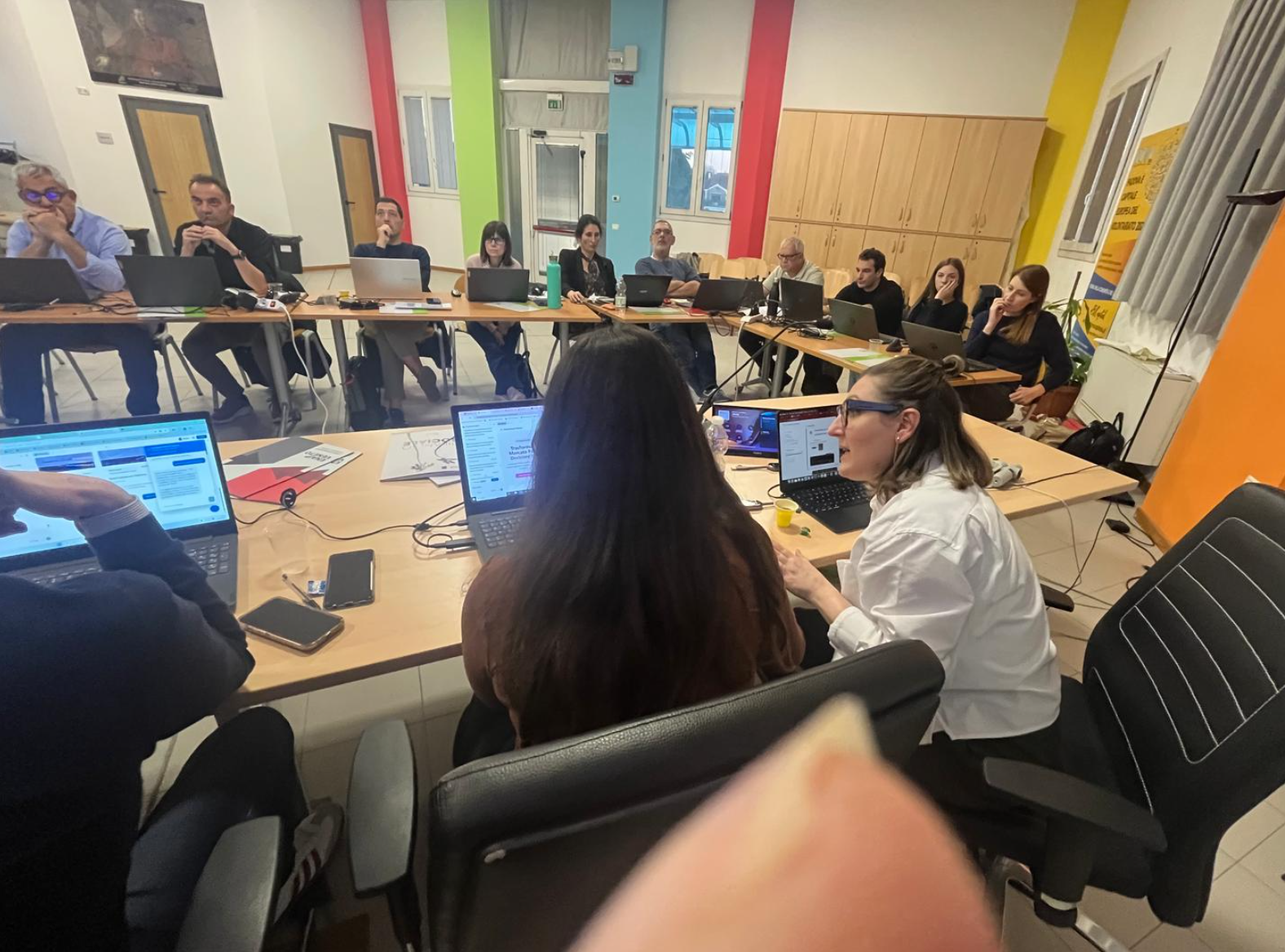
Sara and Deborah gave them a couple of hours of hands-on training in vibe coding. Not theory. Not lectures. Actual building. The students weren't creating classroom exercises. They were building real solutions for real companies. ENAIP brought in local businesses with actual problems.
What happened, they did an amazing job and what happened there was really surprising but then also somehow expected. Very young students with a couple of hours of training, they were able to take off, they built solutions, they were genuinely useful, they were not just classroom exercises, they were real things. - Sara Simeone.
Antonio had predicted success, but what happened exceeded expectations. The combination of what students learnt in school and the hands-on AI practice unlocked something neither side could produce alone.
The combination of what they learned in school, you know, school taught theory and the hands-on AI practice unlocks something that neither side could produce alone and this is the part where matters the most.
The Cognitive Shift
Within hours, not weeks, not school terms, these teenagers were speaking directly with business owners, understanding their problems, and building functional tools to solve them.
The students, they were just really kids, 17 years old, with a couple of hours they were actually able to get introduced to companies and to actually bring solutions to companies. They were speaking with them and really I'm not exaggerating, with a couple of hours of training they started thinking in a different way and I think this was exactly the shortcut to transformation.
The shift wasn't just technical. It was cognitive. They stopped seeing themselves as students waiting to enter the workforce and started seeing themselves as builders who could create value immediately. The insecurity that typically accompanies early-career work evaporated.
The Public Validation
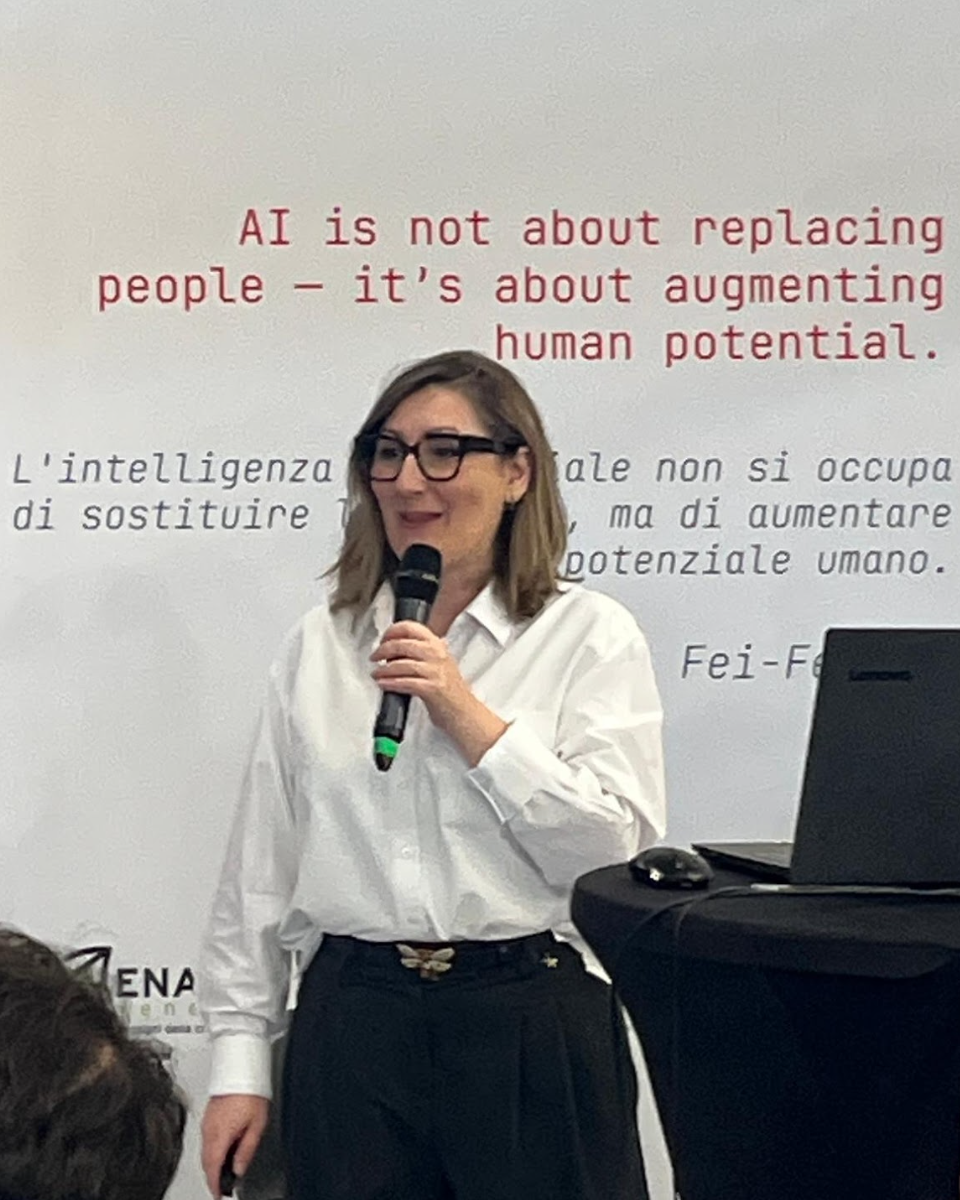
The real test came when the students had to present their prototypes publicly. On stage, in front of a large crowd - at Europe’s biggest student fair Job&Orienta - to an audience that included potential employers. Companies in the audience, businesses that hadn't been approached or asked to participate, started offering internships voluntarily after seeing the students' work.
This wasn't charity. These were genuine offers from businesses that recognised immediately useful capability when they saw it. The students had demonstrated something rare: they could take a business problem, understand it quickly, and build a working solution in hours.
The Economic Reversal
Antonio understands the labour market dynamics better than most. His work in human capital development across multiple countries had shown him a troubling pattern.
Back in the 90s, we were the ones replacing those that were in their 50s when the technology arrived. And nowadays we see that we are actually going backwards. We have us replacing the kids because nobody wants to hire the younger ones because they are missing experience. They may know technology, they may know all the tools but we don't need them. We got AI that does their jobs.
The traditional career pipeline had broken. Young people were being locked out of entry-level positions because they lacked experience, but they couldn't get experience because no one would hire them. The ENAIP programme reversed this dynamic entirely.
You don't have to retrain your workforce from scratch. You can bring in people who are natively fluent and let them pull the rest of the organisation forward. That was a big idea and that was the real shift. It was not an AI replacing worker. It was a new generation equipped with AI helping existing businesses to move faster than they could do alone.
Instead of young people competing with AI, they were equipped with it. Instead of lacking experience, they had capabilities that workers with decades of traditional experience couldn't match. Instead of being a cost risk, they became immediate value creators.
Scaling Through Infrastructure
The student programme was transformational. But Antonio knew that real scale required training the trainers. ENAIP's teaching staff had spent years preparing students for traditional careers. NoCodeLab ran a separate programme for the ENAIP team itself.
We also ran a program for their team, the actual ENAIP teachers and operations team, and the energy and the feedback that we got after that session was incredible.
The instructors experienced the same breakthrough their students had. Within hours, they went from being sceptical or intimidated by AI to being builders themselves. Sara described the initiative as 'very, very transformative', and she was talking about both the students and the staff. The capability didn't just touch one cohort. It embedded itself in the institution.
ENAIP Veneto's Perspective
Maria Ferrara, Operations and Marketing Director at ENAIP Veneto, reflects on what the NoCodeLab collaboration unlocked:
When Antonio Putrino reached out to ENAIP Veneto's CEO to share the opportunity that NoCodeLab's vibe coding approach represented, the response was immediate. Innovation culture is one of ENAIP Veneto's core values, but in organisations of significant scale, the gap between believing in innovation and actually accelerating it can be wide.
What NoCodeLab's training unlocked was something specific: the confidence to engage with AI not as an external, uncontrollable force, but as something you build yourself, for yourself. The insight is simple but powerful: if you created the tool, you understand it better than anyone else. That shift in ownership changes everything about how people relate to AI in their daily work.
The hands-on sessions with Sara and Deborah were intense, but their lasting value went beyond the practical applications that followed. They accelerated a cultural transformation that ENAIP Veneto had long been working towards.
What Stayed
When NoCodeLab stepped back, ENAIP kept moving forwards. The students kept building. The instructors kept teaching. The companies kept hiring. The capability stayed, not on retainer, but embedded in the institution itself.
Antonio's bet on vocational training over enterprise consulting wasn't just different. It was structurally superior. His 30+ years leading digital initiatives across multinational corporations had taught him to recognise the difference between revenue and value, between activity and impact.
The students who secured internship offers will enter companies and immediately start building internal tools. The ENAIP instructors will teach thousands more students over the next decade. The capability multiplies organically, without NoCodeLab needing to be in the room.
Antonio saw what happens when you combine innovation, strategic execution, and a strong focus on people to create long-term, sustainable value. He applied the same principles that earned him the Stella della Solidarietà Italiana: service to community, investment in human capital, building infrastructure that outlasts any individual intervention.
Antonio bet on the next generation, and won.